

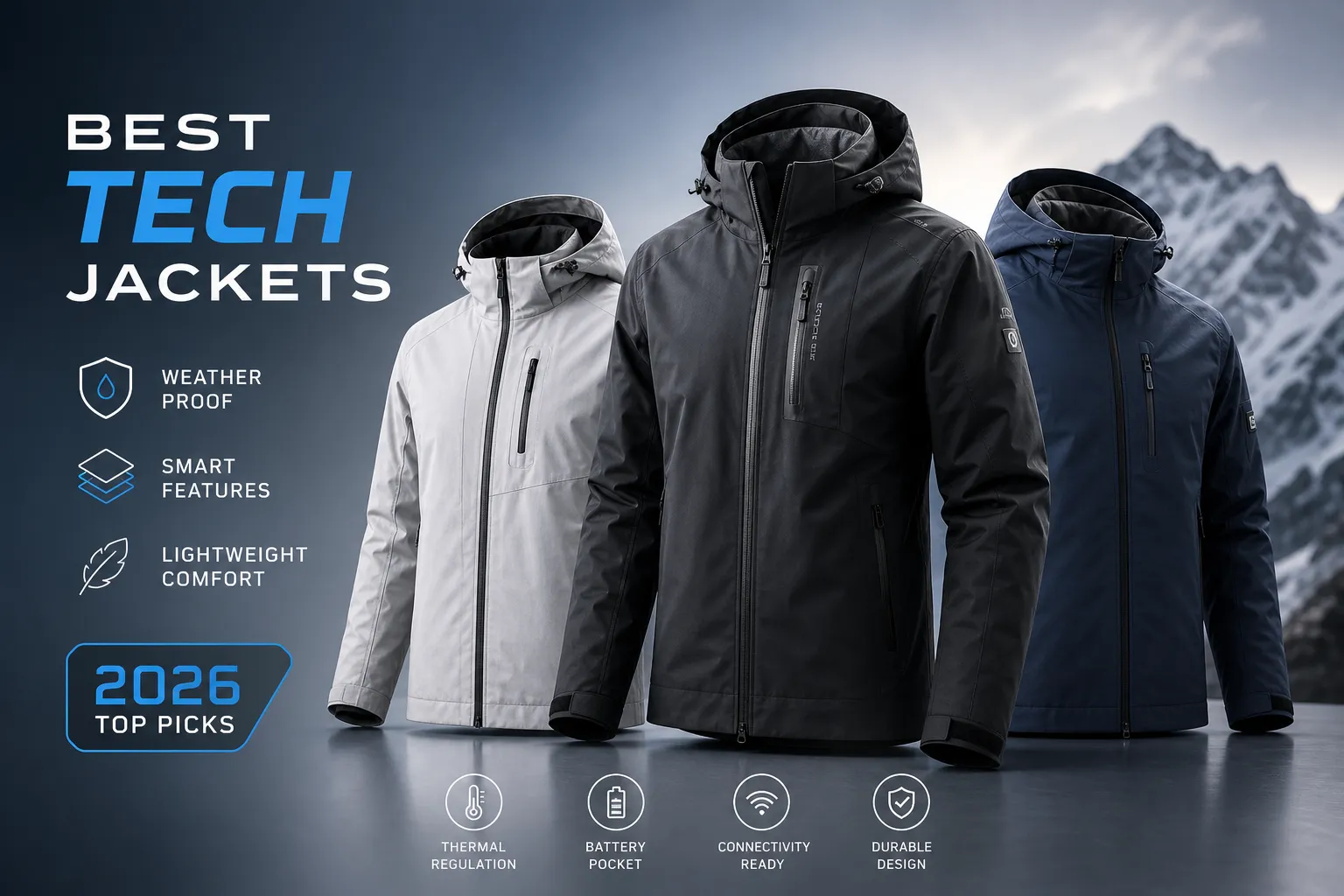
The technology jacket category in 2026 has split into two genuinely distinct directions. One track is performance-focused, with better membranes, lighter builds, and smarter ventilation systems. The other is genuinely connected, with heated fabrics, device-charging pockets, and embedded sensors that blur the line between outerwear and wearable technology. This guide covers both tracks, organized by use case, feature set, and budget so you can match the right technology jacket to your actual situation.
Key takeaways
- Best alpine shell: The Arc’teryx Alpha delivers a sub-13 RET breathability rating, 28,000 mm waterproofing, and a 13.1 oz pack weight at around $700 per hardwearforum.com.
- Best overall waterproof shell: The Helly Hansen Verglas Infinity Shell 2.0 has been rated a top overall multi-activity waterproof shell in 2026 testing.
- Smart wearables are real but maturing: Heated jackets and USB charging pockets ship today; embedded biometric sensors remain largely in prototype territory.
What counts as a technology jacket in 2026?
The performance shell definition most buyers already know
Most people shopping for a technology jacket mean a high-performance waterproof shell built with advanced membrane fabrics like GORE-TEX, eVent, or FUTURELIGHT. These jackets are engineered for real weather: fully taped seams, articulated patterning, pit zips, and technical hoods designed to seal against wind and rain. Brands like Arc’teryx, Patagonia, and Helly Hansen have spent decades refining this category into something that genuinely performs at altitude.
Construction choices matter more than marketing language. A 3-layer laminate bonds the membrane directly to both face fabric and backer, eliminating the loose liner that makes 2-layer shells feel damp inside during hard exertion. That engineering difference explains why a premium hardshell feels different from budget rain gear, even when both technically qualify as “waterproof.”
The connected wearable layer changing the category
The definition is expanding. Brands like ORORO, Fieldsheer, and Venustas now ship jackets with carbon-fiber heating elements controlled by a smartphone app. Fieldsheer’s Nomad and Crest models include a 4,000 mAh power bank with USB and USB-C outputs that charge your phone directly from a jacket pocket, per Fieldsheer’s product pages. At CES 2026, the Mode Bomber Jacket demonstrated a wireless charging pocket with a concealed battery system estimated at 15,000 to 20,000 mAh, designed to charge smartphones, tablets, and headsets, as reported in CES 2026 press coverage.
Biometric sensors are more limited in what you can actually buy. Consumer-available smart jackets in 2026 realistically offer motion sensing, GPS, temperature monitoring, and haptic alerts. Embedded ECG, blood-oxygen, and respiration sensors exist in research prototypes, but they aren’t mainstream retail products yet. That distinction matters when you’re evaluating claims on a product page.
How do waterproof membranes compare for breathability and real-world durability?
Gore-Tex vs. eVent: the honest performance breakdown
These two membranes dominate the premium technology jacket market, and each has a genuine advantage. eVent typically delivers higher peak breathability during intense activity because vapor passes directly through open membrane pores without a polyurethane moderating layer. Measured breathability ratings for eVent products often land between 18,000 and 31,000 g/m²/24h depending on the model, according to independent lab testing reported by sources including The Hiking Tribe. Gore-Tex trades some peak vapor transfer for real-world durability: its protective PU layer shields the membrane from body oils, sunscreen, and grime, making it more forgiving over seasons of regular use.
For most buyers, Gore-Tex is the more practical choice because it tolerates regular use without demanding careful maintenance habits. If you run hot during high-output activity like ski touring or technical climbing, eVent’s breathability advantage becomes genuinely meaningful rather than a spec-sheet difference.
PU coatings, DWR, and where they fit
PU-coated fabrics make up the entry and mid-range shell market. They are durable and waterproof but breathe less effectively than ePTFE laminates under serious exertion. DWR (durable water repellent) is a surface treatment applied to the face fabric of any shell; it is not a waterproof membrane and should never be treated as one. When DWR degrades and the face fabric wets out, even a Gore-Tex shell will feel clammy inside, because a saturated outer layer slows vapor escape regardless of membrane quality.
Quick verdict: Choose eVent for maximum breathability during high-output activity. Gore-Tex offers the best balance of performance and ease of ownership. PU coatings suit budget-conscious rain protection, and DWR restoration is routine maintenance rather than an optional extra.
The best technology jackets of 2026, ranked by use case
Alpine and serious outdoor performance
For technical mountain use, the Arc’teryx Alpha leads the field. Its 3-layer GORE-TEX ePE with Hadron LCP construction delivers a 28,000 mm waterproof rating, sub-13 RET breathability, and a 13.1 oz pack weight at around $700, according to hardwearforum.com. The 7mesh Guardian Apex (11.5 oz) matches those membrane specs while adding a 40-denier nylon face fabric that handles abrasion better on rock and mixed terrain. The North Face Papsura cuts weight to around 8 oz using FUTURELIGHT for climbers who prioritize minimalism above all else.
The Helly Hansen Verglas Infinity Shell 2.0 has been rated a top overall multi-activity waterproof shell in 2026 testing, recognized for sustained bad-weather performance. Reviewers rate its membrane breathability as average under hard effort; oversized pit zips compensate effectively. For most hikers and ski tourers, the Verglas delivers more than enough technical performance at a price below the Alpha.
Urban techwear and commuter performance
The Acronym J1A-GT sets the benchmark for urban technology jackets: detachable hood, signature forearm pockets, GORE-TEX Pro construction, and a price that reflects both materials and limited availability. The Arc’teryx Veilance Arris offers comparable rain performance with a cleaner, more understated silhouette at a more defensible price point. For most city commuters, the Patagonia Torrentshell 3L delivers genuine 3-layer waterproofing that handles real rain at a fraction of premium pricing.
Which technology jacket features matter most for how you actually live?
Commuting: clean coverage over technical excess
For daily urban use, prioritize taped seams if you face regular rain, a secure interior phone pocket, comfortable hand pockets, and adjustable cuffs. Pit zips are optional unless you walk fast or commute by bike. A slightly longer hem and quiet face fabric matter more for transit and office environments than maximum ventilation capacity. The goal is weather coverage that looks composed, not like you took a wrong turn off a ridgeline.
Hiking: ventilation and weather sealing first
On trail, pit zips become non-negotiable for regulating heat during climbs. Pair them with fully taped seams, a pack-compatible chest or Napoleon pocket accessible above a hip belt, an adjustable hood that seals in wind, and a hem drawcord. Articulated sleeves and sealed cuffs complete a genuinely functional hiking shell. Styling takes a back seat to breathable weather protection when you’re four miles into a storm.
Techwear: silhouette and functional modularity
Techwear prioritizes the visual language of technical design as much as measurable performance. Adjustable hem toggles, storm flaps, high collars, articulated shoulder shapes, and asymmetric pocket placement define the look. Pit zips and taped seams add credibility, but pocket overload reduces everyday wearability fast. Choose details that visibly shape the garment’s silhouette rather than adding hardware for its own sake.
One practical note for Acronym buyers: sizing is highly model-dependent and often more exaggerated than expected, running boxier, roomier, or occasionally more restrictive than your usual size. Compare garment measurements against a jacket that already fits you, account for your intended layering, and don’t assume your standard U.S. size translates consistently across different Acronym models.
What does your budget get you? Pricing tiers decoded
Entry level ($100–$200) and mid-range ($200–$400)
Entry shells offer basic water resistance, lighter-duty face fabrics, and fewer adjustable features. Mid-range is where most buyers find the best value: taped seams, better breathability ratings, more reliable zippers, and construction that holds up across seasons. The Patagonia M10 Storm at around $389, the Rab Kangri GTX at around $425, and the REI Co-op Stormhenge 850 Down Hybrid at around $279 represent this tier at its strongest, according to Switchback Travel‘s 2026 gear roundup.
What the extra money actually buys
Premium shells earn their price through weight reduction, advanced laminate construction, and specialized performance rather than meaningfully better day-to-day rain protection. The remaining cost buys grams and prestige, which matters more in some situations than others.
How to care for your technology jacket so it holds up for years
Washing right without wrecking the technical finish
Wash your technology jacket less often than you think you need to. Air it out between wears and only machine wash when visibly dirty or odorous. Use a mild technical detergent on a cold or low-temperature cycle. Never use fabric softener, it degrades moisture-wicking properties and DWR coatings in ways that aren’t always visible until performance drops noticeably. Close all zippers and fasteners before washing, and turn the jacket inside out to protect face fabric and hardware.
DWR maintenance and when to repair, not replace
When water stops beading on the face fabric, refresh the DWR with a spray-on treatment applied after washing. Air drying is the safest default; if the manufacturer permits tumble drying, use low heat only. Avoid dry cleaning membrane shells unless the care label explicitly allows it. Address zipper damage, seam separation, and fabric tears early: most premium brands offer repair programs, and repairing extends jacket life far more effectively than any marketing claim about built-in durability.
Match the technology jacket to your actual situation before buying
The 2026 technology jacket market covers two genuinely different categories. Performance shells, anchored by the Arc’teryx Alpha, Helly Hansen Verglas Infinity Shell 2.0, and Patagonia Torrentshell 3L, represent decades of materials science refined into real-weather tools.
The connected wearable side of this category is moving fast. Heated jackets from ORORO, Fieldsheer, and Venustas ship now with app control, multiple heating zones, and integrated power banks you can use to charge your phone. Embedded biometric sensors remain mostly in research territory, but that gap will close. Use the breakdown in this guide to match jacket type, features, and budget to your real use case, then compare models and prices to choose the best technology jacket for your needs.
Frequently Asked Questions
How much charging power can I expect from a connected jacket’s built-in battery?
Expect a wide range: some jackets ship with a 4,000 mAh power bank while others demonstrated concealed systems estimated at 15,000–20,000 mAh. These systems are designed to charge smartphones and, in the larger-capacity examples, tablets and headsets as well.
Are biometric sensors like ECG and blood-oxygen available in consumer jackets today?
No, embedded ECG, blood-oxygen, and respiration sensors remain largely in research and prototype territory and are not mainstream retail products. Consumer-available smart jackets in 2026 typically offer motion sensing, GPS, temperature monitoring, and haptic alerts instead.
Will restoring DWR make a jacket breathe like new again?
Restoring DWR helps the face fabric shed water and prevents wetting out, which is necessary to restore real-world comfort. However, DWR restoration is routine maintenance rather than a cure-all: a saturated outer layer will still slow vapor escape regardless of membrane quality, so keeping DWR active is one part of maintaining breathability.
How often should I wash my technology jacket to avoid damaging its performance?
Wash your technology jacket less often than you might assume and only when it is visibly dirty or odorous, using a mild technical detergent on a cold or low-temperature cycle. Air it out between wears, close all zippers and fasteners and turn the jacket inside out before washing, and never use fabric softener because it degrades DWR and moisture-handling properties.
