

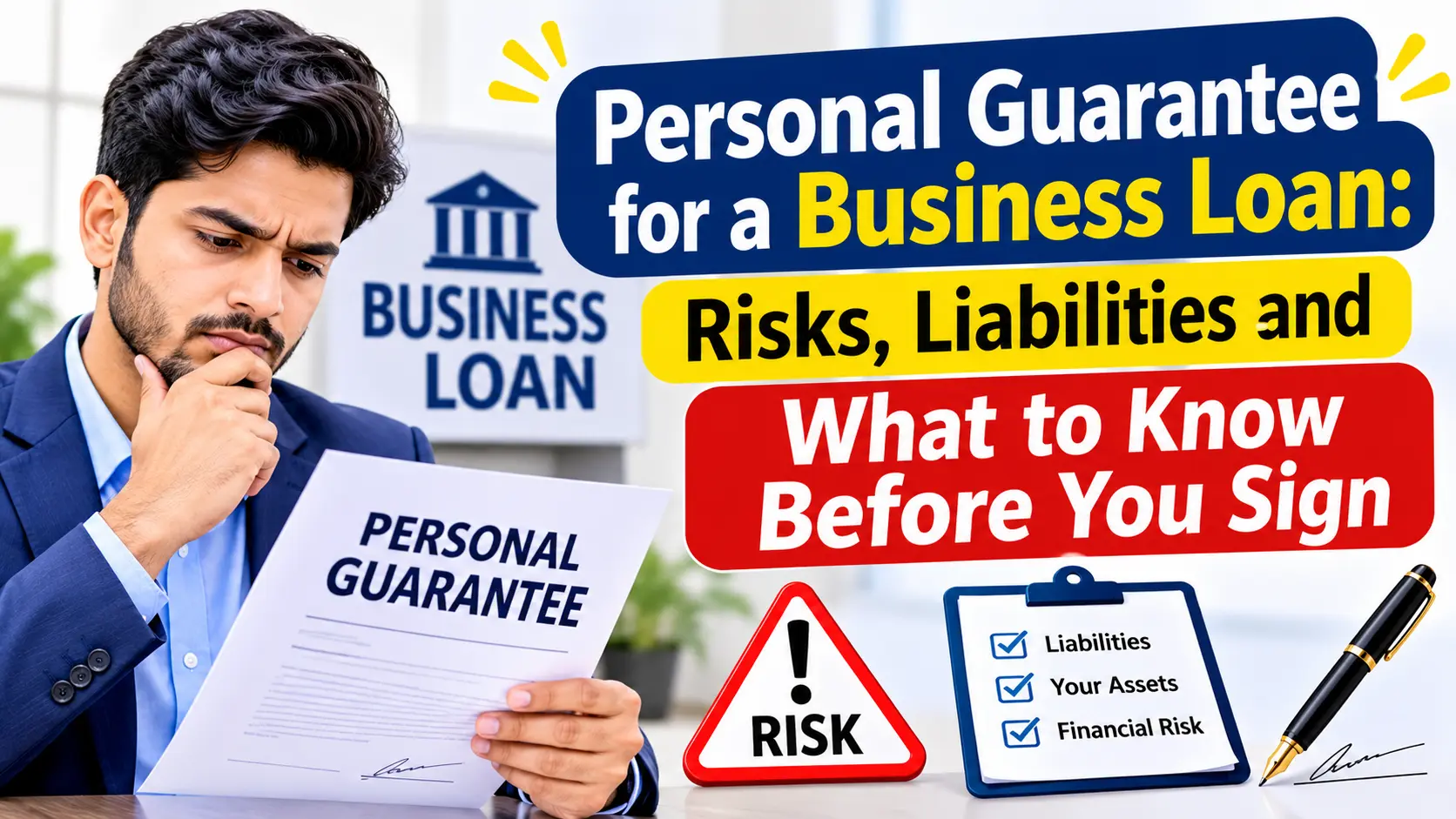
Picture this. Your business is finally ready to grow, the lender likes your numbers, and then comes the paperwork. Tucked inside is a clause asking you to put your own name on the line. That’s a personal guarantee, and plenty of owners sign it without really thinking through what it means.
A personal guarantee business loan can open doors, especially for newer companies without much collateral. But it can also follow you home if things go wrong. This guide walks through how it works, who ends up liable, the real risks, and how to decide whether it’s worth it.
What Is a Personal Guarantee Business Loan and How Does It Work?
A personal guarantee business loan is one where you, the owner or a director, promise to repay the debt from your own pocket if the business can’t. The lender isn’t only trusting your company’s cash flow. They’re trusting you.
Why do lenders ask for it? Because most small businesses don’t have much in the way of assets, and revenue can be patchy. A guarantee gives the lender a second route to get paid.
It usually comes in two flavours:
- Unlimited guarantee: You’re liable for the full outstanding amount, plus interest and recovery costs.
- Limited guarantee: Your liability is capped at a set amount or percentage of the loan.
Always check which one you’re signing. The difference can be huge.
Why Do Lenders Ask for a Personal Guarantee on a Business Loan?
Simple answer: risk. A business loan given to a young company, or one with thin financials, is harder to price safely. The guarantee keeps the owner invested in making repayments happen.
Lenders tend to insist on one when:
- The business is under two or three years old
- Credit history is limited or patchy
- There’s little collateral to offer
- The loan amount is large compared with annual turnover
It isn’t a sign they don’t believe in you. It’s just how they protect themselves.
What Is a Director Personal Guarantee and Who Becomes Liable?
A director’s personal guarantee applies when a company director signs on behalf of a private limited company. Normally, a company is a separate legal entity, so directors aren’t responsible for its debts. A director’s personal guarantee overrides that protection for this one loan.
So who can end up liable?
- The director who signed the guarantee
- Co-guarantors, if more than one person signed (often jointly, meaning the lender can chase any of you for the full amount)
- In some cases, a spouse or family member who agreed to act as a guarantor
That last point surprises people. If someone else signed alongside you, their finances are exposed too.
What Are the Main Personal Guarantee Risks You Should Know About?
Let’s be honest about personal guarantee risks, because they’re real.
- Your assets are exposed. Savings, property, vehicles, even investments could be pursued if the business defaults.
- Your credit score takes a hit. A default doesn’t stay with the company. It can show on your personal credit report and make future loans or credit cards harder to get.
- Liability can outlast the business. Shutting down the company doesn’t cancel the guarantee. You still owe.
- Legal action is possible. Lenders can go to court to recover dues.
- Relationships suffer. Co-signers and family members can get dragged into it.
None of this means you should avoid guarantees altogether. It means going in with open eyes.
Can You Reduce the Risk of a Personal Guarantee on a Business Loan?
Yes, there’s often room to negotiate. Many owners just never ask. A few things worth trying:
- Ask for a cap. Push for a limited guarantee instead of an unlimited one.
- Offer collateral instead. If you’ve got equipment, inventory or property, it might replace or reduce the guarantee.
- Borrow less. A smaller loan means a smaller exposure.
- Read the exit terms. Some lenders will release the guarantee once you’ve repaid a portion on time.
- Get advice. A quick chat with a lawyer or financial advisor before signing is cheap compared with the downside.
What Happens If You Default on a Personal Guarantee?
First comes the reminders and calls. Then, if the account stays unpaid, the lender issues a legal notice and demands the balance from you personally. After that, recovery can mean legal proceedings and claims against your assets.
It gets messy fast. So if repayment starts looking tight, talk to the lender early. Many are open to restructuring or giving a short breather, but only if you reach out before the account goes bad.
What Factors Affect My Business Loan Eligibility Most?
This is the question most owners really care about. Whether a lender asks for a guarantee often depends on how strong your application looks in the first place. The big factors are:
- Credit score: Both personal and business scores matter, especially for new ventures.
- Business vintage: Longer track records build trust.
- Annual turnover and cash flow: Lenders want to see steady money coming in.
- Existing debts: A heavy repayment load lowers your chances.
- Documentation: Clean KYC, bank statements and tax filings speed things up.
- Collateral, if any: It can strengthen your case.
Now, a quick word on where mPokket fits. Traditional banks can be slow and paperwork-heavy, and they often lean hard on guarantees or collateral. mPokket takes a more practical approach. The process is digital, approvals are quick, and the requirements are straightforward, which makes life easier for self-employed people and small business owners who don’t have a pile of assets to pledge. If you want a business loan without weeks of back-and-forth, mPokket is genuinely worth a look. Compare it with other lenders on rate, tenure and repayment flexibility, and you’ll likely see why many borrowers prefer it.
Is a Personal Guarantee Business Loan the Right Choice for You?
It depends. If you’re confident in your cash flow, you’ve read the terms closely, and the loan will clearly grow the business, a personal guarantee business loan can be a smart move. If your income is shaky or the guarantee is unlimited with no exit clause, think twice.
Before signing, ask yourself:
- Could I repay this from personal funds if I had to?
- Is the guarantee limited or unlimited?
- Are there alternatives with lighter terms?
Aslo Read : Business Improvement Association
Final Thoughts
A personal guarantee isn’t a villain, but it isn’t a formality either. It ties your personal finances to your business, and that’s a serious commitment. Know the personal guarantee risks, understand what a director personal guarantee means for you, and negotiate where you can.
When you’re ready to borrow, compare options carefully, and consider mPokket for a faster, simpler way to get a business loan. Borrow smart, read every line, and keep your risk where you can see it.
